In view of the growing demand for expert information on the potential applications of geothermal energy systems in the construction industry, the Polish Geological Institute – National Research Institute offers assistance and technical support in this field. We assess the geothermal potential of the ground for the construction of energy-efficient homes and identify suitable locations for such projects. We can quickly determine the expected performance of ground-source heat exchangers (vertical heat exchangers installed in a borehole), thereby assisting in the preliminary planning of ground-source heat pump installations.
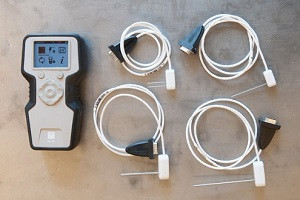
We have state-of-the-art measuring equipment (i.e. a TRT probe, a Hukseflux field analyser for soil thermal properties, a Tempos thermal needle analyser, and a Thermal Disc) as well as a qualified and experienced team of specialists holding the necessary geological qualifications.
THERMAL RESPONSETEST
One of the most commonly used methods for measuring the average effective thermal conductivity of soil and rock, which is determined for the entire length (depth) of the borehole under investigation, is the so-called Thermal Response Test (TRT).
Conducting a TRT is essential when planning all large heating installations with a capacity exceeding 50 kW, e.g. for public buildings.
The TRT is carried out in a single pilot borehole, already fitted with a borehole heat exchanger, selected from among the boreholes planned for drilling.
The TRT test is based on the temperature echo method. The procedure involves injecting thermal energy into a borehole equipped with a ground-source heat exchanger (BHE). The working fluid (e.g. brine or glycol), circulating within the closed system comprising the heat exchanger and the measuring device, transfers heat to the ground. The device records the temperature of the working fluid at the inlet and outlet of the BHE.