UTES - Underground Thermal Energy Storage
- BTES – Borehole Thermal Energy Storage
- PTES – Pit Thermal Energy Storage
- TTES – Tank Thermal Energy Storage
- Energy foundations, geotechnical thermal structures (EF - Energy Foundations, TG - Thermal Geostructures)
- About Project
- Objectives
- Methodology
- STATUS OF IMPLEMENTATION
- RESULTS
- DATA ACCESS
- SIGNIFICANCE OF THE PROJECT
About Project
TITLE OF THE PROJECT
Assessment of the possibility of underground thermal energy storage using closed systems (BTES, PTES/TTES, EF) in selected locations in Poland.
TIMEFRAME FOR THE CURRENT PHASE
02.01.2023 – 30.12.2024
CONTRACTING AUTHORITY/FUNDING AGENCY
Projects funded by the National Fund for Environmental Protection and Water Management (NFOŚiGW):
Assessment of the possibility of underground thermal energy storage using closed systems (BTES, PTES/TTES, EF) in selected locations in Poland (2023-2024)
CONTRACTOR
Polish Geological Institute - National Research Institute
RECIPIENTS
The main beneficiaries of this project include:
- local government,citizens,
- the district heating sector,
- investors and designers of geothermal heat storage systems.
Furthermore, the project supports the implementation of national and local government programmes aimed at combating air pollution, such as ‘Stop SMOG’ and ‘Czyste Powietrze’.
Objectives
The aim of the project is:
- to develop criteria and a methodology for assessing the location of heat storage in soil and rock using closed-loop systems (BTES, PTES/TTES, EF),
- to carry out an assessment of the identified locations in terms of the feasibility of siting underground thermal storage using the said closed-loop systems,
- to develop a set of characteristics for closed-loop systems as one of the potential heating, cooling and energy storage solutions for surplus energy from other renewable energy systems - such as wind farms or solar farms - that could be applied on a large scale in the country.
Methodology
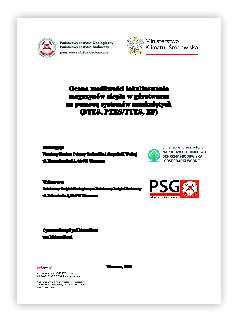 Assessment of the possibility of underground thermal energy storage using closed systems (BTES, PTES/TTES, EF) in selected locations in Poland.
This study presents an analysis of the potential for siting underground thermal energy storage in closed systems using BTES (Borehole Thermal Energy Storage), PTES (Pit Thermal Energy Storage), TTES (Tank Thermal Energy Storage) and EF(TG) (Energy Foundations, Thermal Geostructures). The structure of this study has been designed to provide a comprehensive overview of the subject, ranging from a literature review, through a description of the technologies, to a discussion of the criteria for siting heat storage (with particular focus on geological criteria) and legal aspects. The aim of the publication is to provide knowledge on the possibilities for siting and selecting the optimal technology for underground thermal energy storage. It is aimed at a wide audience: energy engineers, district heating system designers, geologists, geotechnical engineers, as well as representatives of government bodies and investors interested in the development of innovative technologies in the district heating sector. Download
STATUS OF IMPLEMENTATION
The project “Assessment of the possibility of underground thermal energy storage using closed systems (BTES, PTES/TTES, EF) in selected locations in Poland. (2023-2024)” covers 25 selected large-scale facilities, such as combined heat and power plants, industrial plants and food processing facilities, which have surplus energy. The feasibility of implementing various technologies was assessed at the selected locations based on geological and hydrogeological criteria.
In addition, a database has been created containing GIS data layers for the assessment of the identified locations in terms of the feasibility of constructing thermal energy storage. The data is available at our website.
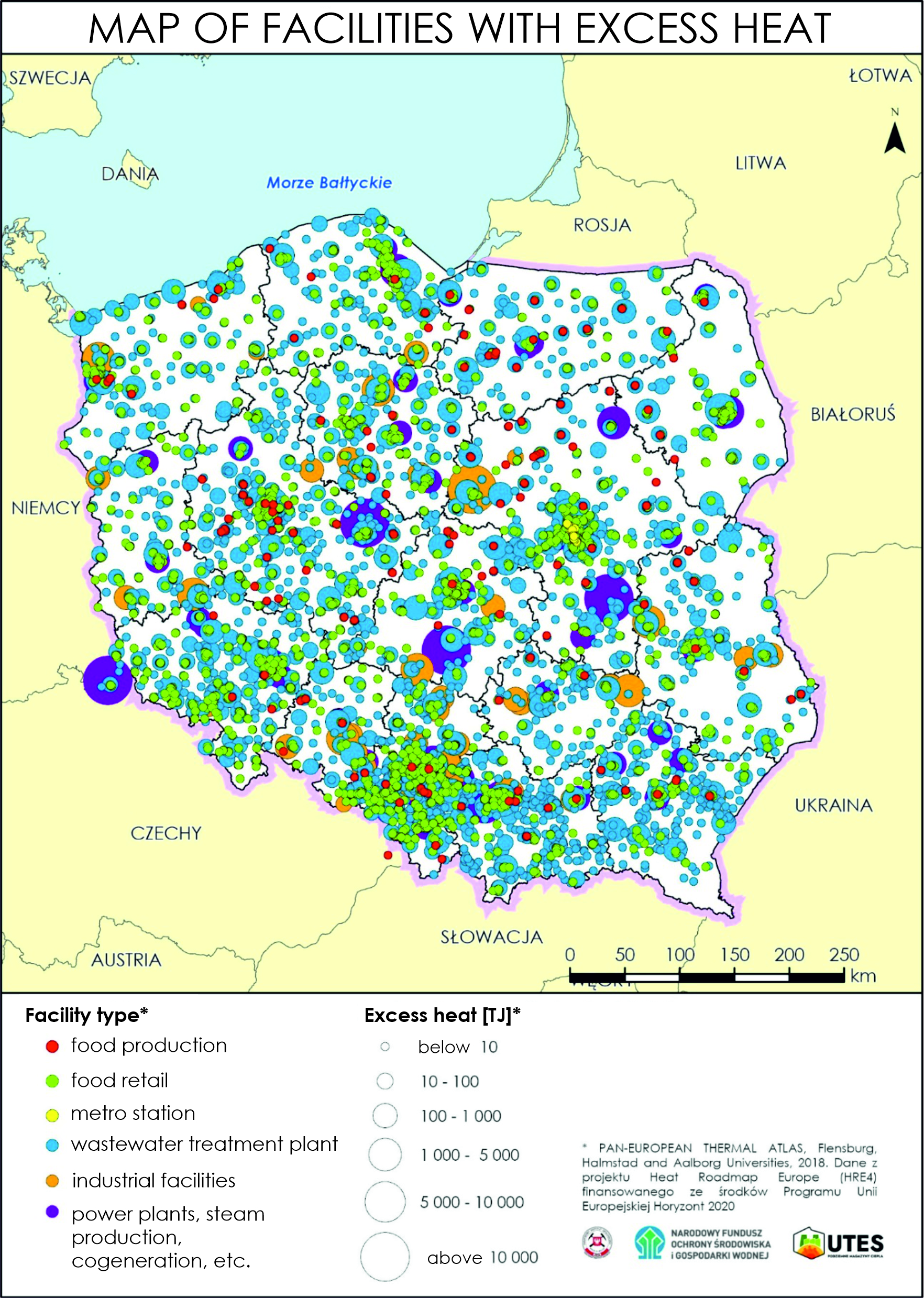
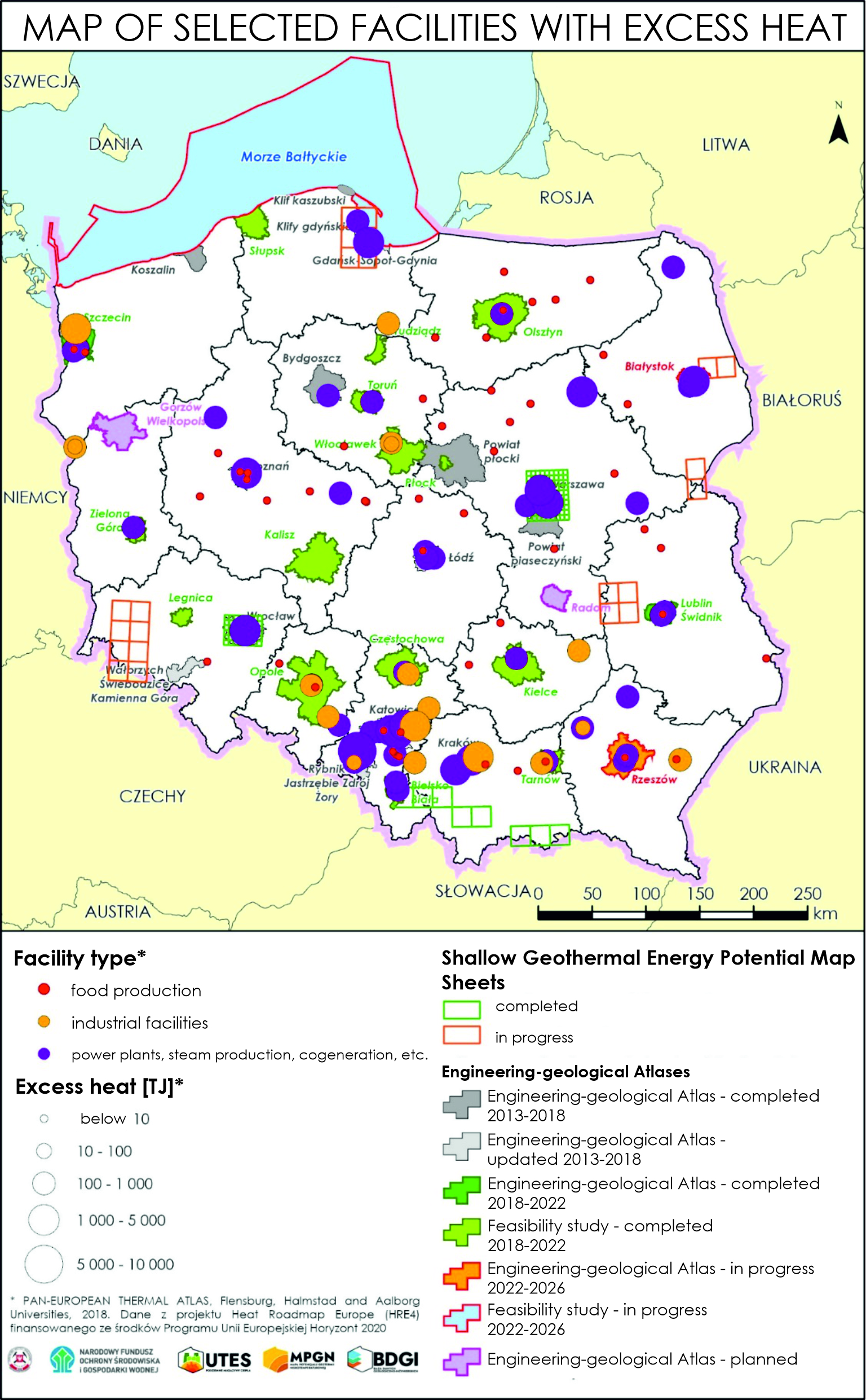
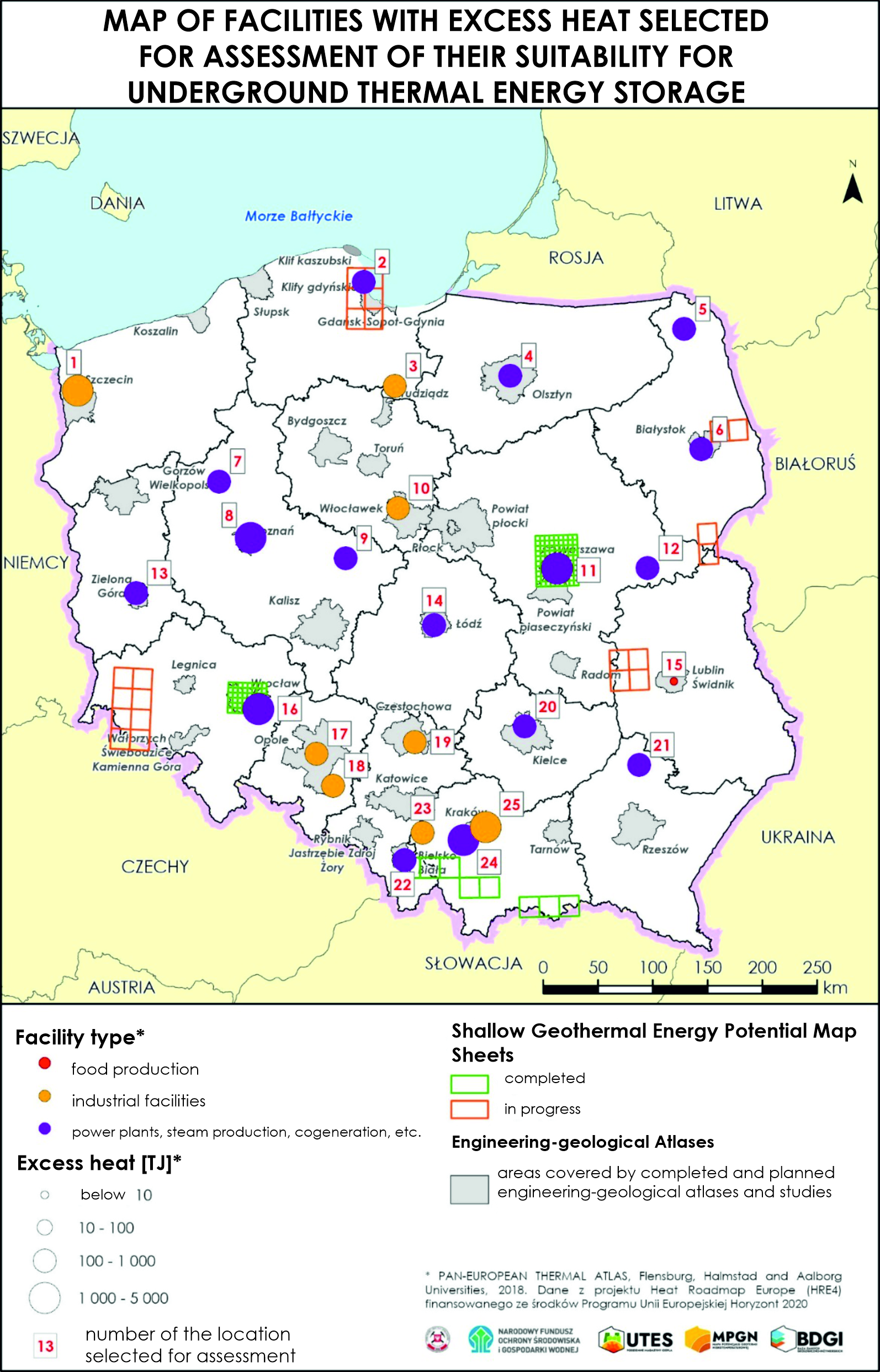
Fig.1 - Map of sites with surplus thermal energy (based on data from https://heatroadmap.eu/peta4; PAN-EUROPEAN THERMAL ATLAS, 2018/)
Fig.2 - Map of selected sites with surplus thermal energy (based on data from https://heatroadmap.eu/peta4/; PAN-EUROPEAN THERMAL ATLAS, 2018, Maps of low-temperature geothermal potential, Geological and Engineering Atlases)
Fig.3 - Map of sites with surplus thermal energy identified for assessment of their suitability for the construction of underground thermal energy storage (based on data from https://heatroadmap.eu/peta4/, PAN-EUROPEAN THERMAL ATLAS, 2018 Maps of low-temperature geothermal potential, Geological and Engineering Atlases)
RESULTS
The most important result of the project is the document entitled “Assessment of the possibility of underground thermal energy storage using closed systems (BTES, PTES/TTES, EF) in selected locations in Poland.” It contains a methodology for assessing the possibility of thermal energy storage, which was tested at 25 selected large-scale facilities, including combined heat and power plants, industrial plants, and food-processing plants with surplus energy.
In addition, the following tasks were carried out:
- assessment of the selected locations in terms of the possibility of constructing underground thermal energy storage systems using closed systems (BTES, PTES/TTES, EF), based on the document entitled “Assessment of the possibility of underground thermal energy storage using closed systems (BTES, PTES/TTES, EF) in selected locations in Poland”, including a ranking of the locations;
- preparation of a database containing GIS information layers for assessing the selected locations in terms of the possibility of constructing underground thermal energy storage systems using closed systems (BTES, PTES/TTES, EF);
- preparation of a database containing GIS information layers for assessing the selected locations in terms of the possibility of constructing underground thermal energy storage systems using closed systems (BTES, PTES/TTES, EF). The available layers prepared for the 25 selected potential locations include:
- Underground Thermal Energy Storage Site Cards;
- polygon map of thermal conductivity based on parameterized shallow boreholes (maps for depths of 2, 5, 10, and 15 m b.g.l.);
- polygon map of thermal resistivity based on parameterized shallow boreholes (maps for depths of 1, 2, and 3 m b.g.l.);
- point map of average thermal conductivity along the profile based on deeper boreholes (maps for depths of up to 10, 15, 30, 40, 50, 70, 100, 130, 150, 200, 250, and 300 m b.g.l.);
- point map of average volumetric heat capacity along the profile based on deeper boreholes (maps for depths of up to 10, 15, 30, 40, 50, 70, 100, 130, 150, 200, 250, and 300 m b.g.l.);
- preparation of a report containing an analysis of the legal conditions for the implementation of closed systems, including BTES, PTES/TTES, and EF, in Poland, together with recommendations.
The data are available on the website.
Findings
The consultations were made with representatives of AGH University of Krakow, the Mineral and Energy Economy Research Institute of the Polish Academy of Sciences (MEERI PAS), and Euros Energy.
As a result of a review of the literature on thermal energy storage, it was found that the international literature is relatively extensive, while the Polish literature is limited.
A classification of thermal energy storage systems was developed, and four of the most common types of underground thermal energy storage using closed systems were described, including:
- Borehole Thermal Energy Storage (BTES);
- Tank Thermal Energy Storage (TTES);
- Pit Thermal Energy Storage (PTES);
- Energy Foundations (EF) / Thermal Geostructures (TG), e.g. energy piles, thermoactive slabs, thermoactive walls, and thermoactive underground structures.
A review of Polish and international underground thermal energy storage using closed systems made it possible to present experience gained from the implementation of numerous underground thermal energy storage systems.
A separate study presented the legal conditions concerning underground thermal energy storage, including legal and administrative procedures, identified gaps in the legislation, and proposed changes aimed at establishing comprehensive regulations for thermal energy storage systems.
Seven groups of criteria for assessing the suitability of thermal energy storage locations were described in a concise manner, including administrative and legal criteria, geological criteria, technical criteria, economic criteria, environmental criteria, social criteria, and policy criteria.
Fifteen geological criteria were described in detail. The geological criteria were used to assess 25 selected thermal energy storage locations in Poland.
A methodology for assessing the suitability of locations for the construction of underground thermal energy storage systems was developed. It includes, in particular, the selection of a location for thermal energy storage, characterization and assessment of the location, preparation of a location ranking, types of site investigations, and general principles for maintaining a database for assessing the suitability of locations for the construction of underground thermal energy storage systems.
A glossary of terms and a list of abbreviations and symbols related to underground thermal energy storage were prepared.
The 25 selected locations in Poland were described and assessed in terms of their suitability for the construction of underground thermal energy storage systems. The descriptions were presented using standardized Underground Thermal Energy Storage Site Cards, while the assessments were presented using standardized Site Suitability Assessment Cards for the Construction of Underground Thermal Energy Storage Systems.
Based on the descriptions and assessments, rankings of the 25 selected locations for the construction of underground thermal energy storage systems were prepared according to the thermal energy storage technology. Depending on the technology, the locations were assessed as having high, medium, or low suitability. Most locations were assessed as having medium suitability, followed by locations with high suitability, while only a small number were assessed as having low suitability.
Recommendations
Given the directions of change related to the transformation of the heating sector and the changing model of the heat market, it is necessary to continue work on identifying and assessing areas suitable for the construction of underground thermal energy storage systems using closed-loop technologies, both for individual and system-scale applications.
It is advisable to provide education and carry out promotional and awareness-raising activities on underground thermal energy storage in order to increase access to these technologies.
It is advisable to establish a national database of thermal energy storage systems, classified by technology type, storage size and capacity, as well as by the source of surplus thermal and electrical energy.
Comprehensive legislative changes concerning thermal energy storage are necessary to enable the development of these technologies.
DATA ACCESS
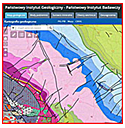
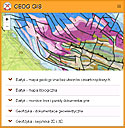
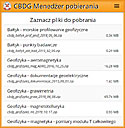
The data will be available for download via the GeoLOG app, which is available free of charge for mobile devices from Google Play and App Store as well as through Portal CBDG - Geologia, under the GEOTHERMAL tab.
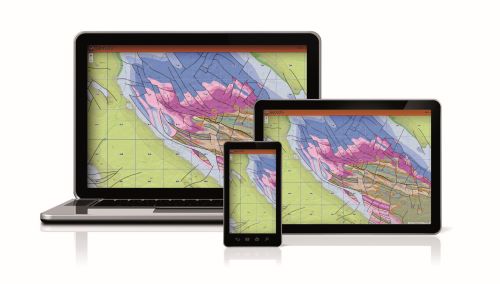
Mobile app GeoLOG

Map portal Geologia
CBDG GIS
Download Manager
SIGNIFICANCE OF THE PROJECT
The issue of seasonal heat storage is of great importance from the point of view of energy efficiency in modern construction. The energy used for heating and cooling buildings accounts for almost half of final energy consumption in the EU. Seasonal heat storage helps to smooth out the demand curve for heating and/or cooling, thereby reducing the use of peak-load sources.
This project has been prepared in response to the document entitled ‘Long-term programme for the development of geothermal resources in Poland’, drawn up by the Ministry of Climate and Environment. It also forms a direct part of the implementation of Specific Objective No. 6 of the Polish Energy Policy until 2040 (M.P. 2021, item 264) - the development of renewable energy sources.
The benefits of carrying out this task mainly include the preparation of a comprehensive assessment of the potential for utilising low-temperature heat and cold storage technologies, including in terms of necessary legislative changes, technological issues and methodological guidelines. This will ultimately provide decision-makers, investors and potential users of BTES, PTES/TTES and EF systems with reliable knowledge about these technologies and facilitate their implementation in the country.